"Just a few scattered seats were occupied. It was clear now how few they were. A sparse audience in her theatre of nature: twelve pupils - five boys, seven girls. The thirteenth had gone back to technical school, even though Mrs Schwanneke had intervened forcefully on his behalf. With repeated private lessons, home visits and psychological reports. Some sort of concentration problem. The things they came up with! These developmental problems they'd read somewhere or other. First there was dyslexia, then dyscalculia. What next? An allergy to biology? Back in the old days there were just pupils who were bad at sport or music. And they had to play and sing along with everyone else anyway. It was merely a matter of willpower."
from The Giraffe's Neck by Judith Schalansky
"Was ich noch zu sagen hätte"

Those of you, living in the Netherlands and a book lover like myself, are probably aware of the 10 days of bookmania in The Netherlands called: "boekenweek" (~'book week'). Every year in March, the so called CPNB = Collective Promotion of the Dutch Book is busy promoting Dutch titles. If you happen to buy a Dutch title during those 10 days for at least € 12.50 (currently) you'll get a "boekenweek cadeau", a so-called 'present', with the title specifically written for this occasion.
Each year one particular theme becomes a sort background canvas for various activities in bookshops, public libraries, schools, theatres and other locations. You cannot possibly miss it if you love books.
 And this year's theme is closely connected to the fact that The Netherlands & Flanders will be 'guest of honour' at the book fair in Frankfurt/Main (D). Therefore, the focus of the book week is on their 'eastern neighbour', Germany, with the title: "Was ich noch zu sagen hätte", part of a song by singer-songwriter Reinhard Mey (loosely translated as "oh, and by the way, what I still wanted to mention"). As being a German bookmania myself I was very much looking forward to possible activities around the theme and I was expecting some interesting readings related to the huge variety of German literature.
  I have to admit that I was a bit worried the time the theme was made public last year. The focus of the CPNB was mainly on the shared history of Germany and the Netherlands: WW II. And, to include some literature, some historical authors as Goethe, Schiller and, astonishingly, Günter Grass were mentioned (I am surprised that Günter Grass is still in vogue in The Netherlands as he had lied about his military status during WWII).
 Actually, I don't mind talking about WWII and Germany's responsibility, especially with the strengthening neo-Nazis and the political right wing thrift these days. And I don't mind talking about Goethe, Schiller and Nobel prize winner Günter Grass, but I missed the latest developments in literature.

And the Goethe Institut in the Netherlands invited a handful of German authors to present their writing during the week like Karen Köhler, Ingo Schulz, Jenny Erpenbeck and poet Jan Wagner. Please feel free to check their site: http://www.boekenweek.nl/optredens-duitse-auteurs-in-nederland/

Still, as the theme is 'what I still wanted to mention', I've decided to give a tiny, very personal, glimpse of some German authors I think are worth mentioning. This will be a tiny sand grain in the huge choice of books and titles available each year in Germany.
I have started my presentation with a quote by Judith Schalansky. Judith is one of the younger generation of authors, as are Juli Zeh, Katharina Hacker, Julia Franck, and very lately with a debut novel, Karen Köhler (who will be in The Netherlands during the 'book week'), all born in the 1970s (and to my knowledge all translate into Dutch and/or English). Born a decennia earlier: Independent Foreign Fiction Prize winner Jenny Erpenbeck, German Book Prize winners Lutz Seiler and Uwe Tellkamp, nominated authors Ingo Schulze and Karen Duve, linguistic artist Sibylle Berg, award winning author Felicitas Hoppe, Ilija Trojanow, and one of my favourite authors Feridun Zaimoglu. If you tend to remark, that the last two might not belong to a list of German authors...please be reminded that Emine Sevgi Özdamar, Turkish born author, is a member of the German Academy for Language and Literature. And if you would ask people in the streets about Rafik Schami or Wladimir Kaminer, both born outside Germany, people would still recognize them clearly as German authors. German literature is so much more than some people apprehend.
 But even if you haven't heard of all the above mentioned authors (though you must be oblivious if you have never heard of Jenny Erpenbeck), I still miss the other 'established' German authors like Hans Magnus Enzensberger (also a publisher of a wonderful 'library'), Uwe Timm, Christa Wolf, Martin Walser, Botho Strauss and Sarah Kirsch.
 And what about Nobel prize winner Herta Müller?!
 Let's go back even further: Siegfried Lenz, Heinrich Böll, Thomas Mann and another favourite of mine: Erich Kästner, the only author being present in Berlin 1933 when his books were being burnt at the book burning in Berlin. Just only lately, Hans Fallada has been discovered by the Dutch audience, an author writing about the social and political critical times of the Weimar Republic.
And I haven't even started about all the marvellous poets along the line like Kurt Tucholsky, Ringelnatz, Erich Fried, Peter Rühmkopf, Robert Gernhardt, Ulla Hahn, Hilde Domin and so many, many more.
Still, a lot to discover at least for those who would and want to take the time and energy to be curious about German literature. I hope you do.
And for those, who haven't listened yet to the complete song by Reinhard Mey, here's a live recording: https://youtu.be/bBXSa0FzUxs
 |
| Foto: Johannes Wallat (RuhrNachrichten.de) |
Quote of the Month - February 2016
Ik hou van Holland
'Ik hou van Holland', zei de paraplu.
'Het is mijn land,
Ik kan me geen ander land voorstellen
waar ik altijd zo mezelf kan zijn
en zo open voor iedereen.'
###
I love Holland
'I love Holland', the umbrella said.
'This is my country,
I cannot imagine any other country
where I could always be so much myself
and so open to everyone.'
poem by Rodaan al Galidi, presented at WU 20014
Winternachten 2016 - Writers Unlimited, Den Haag

Starting with the Opening Night on Thursday and the presentation of the Oxfam Novib PEN awards, the tone of the festival is set: freedom of speech, the possibility to express and transmit thoughts and feelings freely and, most of all, safely, to inform of circumstances that are usually suppressed - this is, next to the entertainment and meeting grand authors, what makes this festival so special.
And this year's Opening Night showed again how important it is to reveal suppression of the free word worldwide. As director of Oxfam Novib Farah Karimi pointed up in her speech, in those thirteen years of the awards being presented, two of the past awarded authors have been killed in the meantime. And this year's award ceremony was also overshadowed by the fact that none (!) of the three authors could be present at the festival themselves: Turkish journalist Can Dundar is currently imprisoned for articles on the Turkish president Recep Erdogan, poet and author Amanuel Asrat from Eritrea has been imprisoned since 2001 and it is even unclear if he is still alive, and author Omar Hazek, was held back by the authorities at the airport in Egypt on his scheduled flight to Schiphol. To hear about these facts made it obvious how fragile the freedom of speech, to critically inform and survey suppression, still is in the 21st century.

Next, I switched halls and listened to Dutch journalist Frank Westerman in a talk with Croatian author Slavenka Drakulic on the war in Yugoslavia and its aftermaths. Again and again, their talk showed how important it is to report on wartimes form various points of view reflecting the huge impact war has on its manifold 'participants'.
The successive talk in hall 2 focused as well on informing listeners from a non-governmental point of view on their countries in turmoil respectively. Egyptian writer Alaa Al Aswany informed of the Arab Spring and Ukrainian author Andrey Kurkov of the Ukranian uprising. How different and still similar the unrest in both countries are influenced by the various layers of its society. The wish to change circumstances, to actively participate in the redirection of one's country's history and simultaneously being faced with the multilayers of interests underlying the various activities. Again, this talk showed how important it is to have critical voices giving a larger picture of the inner conflicts of each country.
And finally, my personal 'Friday Night' at the festival, always closes with poetry. In hall 1, the nominated poets to the VSB poetry prize present their poems and each time, the festival succeeds in making special arrangements. This year, a poem by Syrian author Adonis was set on music by 'musician in residence' Dick van der Harst and his fellow musicians. Modestly arranged, still excellently performed. It's been a pleasure again!
Next day, Saturday, started early again: I visited the literary brunch organised by a young community called, CLEEFT, on first time novelists: what happens when your first book is being published. Bregje Hofstede and Lize Spit were interviewed on their experiences on their first book. Lize Spit just had her first book presented at the festival. All in all a very interesting talk with music by Gerson Main, an upcoming singer-songwriter with hilarious texts and a notable outfit. Interesting point being made by the audience: do first time novelist have to be young of age? Food for thought for another literary brunch.

Another event in hall 2 took on a similar tone: how much does national / private conflicts have influence on the long term: "Where can you hide?" with authors from all walks of life: Petina Gappah from Zimbabwe, José Eduardo Agualusa from Angola, Joanna Bator from Poland and György Dragomán from Romania presenting their books with each a female protagonist trying to hide from reality. Most notable author to me was José Eduardo Agualusa. His style of writing made me very curious about his novels and I will certainly read on...

And then followed another excellent event in hall 1: the "Seven Deadly Sins" - seven authors were asked to write a text on one of the capital sins, complemented by 'musician in residence' Dirk van der Harst and his colleagues plus the extraordinary voice of singer Lieselot de Wilde. Again, a programme I can blindly trust to give me thorough pleasure and joy of the spoken word by each noteworthy author.
To bring the evening to a close emphasising the dark side of the festival (according to its motto), Belgian singer Helmut Lotti presented a mix of poems and songs from his latest CD making use of his very special timbre.
 And I couldn't leave the festival without the early Sunday morning radio show O.V.T., transmitted live from the festival. Interesting authors being interviewed on various subjects: this year, part of the show focused on the latest book by poet Rodaan Al Galidi Hoe ik talent voor het leven kreeg ('How I got talent for this life' not yet translated). Instead of the media writing over refugees and their lives, Rodaan was asked by Adriaan van Dis to publish his point of view as a refugee and his long term bureaucratic ordeal in the Netherlands. In his typical comic way Rodaan succeeds in describing a tragic situation in such a hilarious way that you can never be sure whether to laugh or to cry. His style reminds me so much of the style of Nasreddin, the Iranian philosophical poet. In the meantime his book has even reached prominence as it was declared 'Book of the Month' by the Dutch tv programme DWDD acknowledging his singular point of view.
Again, Winternachten has been a wonderful and inspiring begin of the new (literary) year and I am glad to have taken the time to attend all four days! Time again to make use of an altered Jewish saying: "Next year in Den Haag"!
Quote of the Month - January 2016
"The year 2016 shall be
a wonderful year!"
"I wonder..."
***********************
Wishing you all a prosperous and
healthy New Year 2016!
Thank you for checking my blog those past years;
hopefully you will continue checking it monthly.
I shall take care to give you reason to do so.
Quote of the Month - December 2015
Christmas is a time of cheers,
not a time of sorrows.
So have some fun, drink some beer,
and be at work tomorrow!
Christmas greetings to the volunteers, Kibbutz Hatzor-Ashdod (Israel), 1985
Great voices - Berlin III
 Some time ago, my mother asked me how Berlin has been...that's when I realised that I was lagging behind with this blog. So much had happend in the meantime: I have not only been to Berlin in September but, at the same time, found and moved into "a room of my own" after 1,5 years of shifting between The Netherlands and Germany. So, for you, dear reader, I will look back on my stay in Berlin at the "Internationales Literaturfestival 2015" (ilb).
 I had tickets bought to some very inspiring and notable authors. Let's start with Jenny Erpenbeck. Just in short as I had her already mentioned several times on this blog (see April & September 2015 & July 2012). Jenny introduced her latest book in German Gehen, ging, gegangen ('Go, went, gone'; not yet translated) in which she turns to the issue of immigrants, specifically in her book, situated in Berlin. I have started reading it while staying in Berlin which was alluring for I walked some places that are mentioned in the book which made it even more palpable.
 Then there was Laksmi Pamuntjak with her latest book Amba / The Question of Red / Alle Farben Rot (transl.: Martina Heinschke) in which she interweaves historical incidents with an Indonesian mythology. I have seen her later again at the Writers Unlimited programme The Series in den Den Haag being interviewed on the subject of Indonesia during the times of 1965-66. I will write more on her in springtime as I will give a talk on her in Germany in March 2016.
 As Indonesia had been guest of honour at the Buchmesse Frankfurt this year the Indonesian Embassy in Berlin held a book presentation dealing with the complex subject of the 30 September Movement. As I will have a talk on Laksmi I took the opportunity to gather all possible additional information around this subject. So I bought a ticket to Leila S. Chudori's presentation of her latest novel Pulang / Home. Whereas Laksmi is approaching the same subject from a mythical point of view Leila takes a journalistic approach. Still, both authors are brave enough to touch a taboo on Indonesian history. Interesting to me not only because of the talk I will give but also because Indonesia is still closely connected to The Netherlands. For those living in The Netherlands: Leila's book has just been published by De Geus: Naar huis (transl.: Henk Maier) and she will attend the Tong Tong Festival in Den Haag at the end of May 2016.
Astonishingly, there had been many young people in the audience though obviously they had been more interested in Laurie's strong language. All three had a clear point in focusing on equal rights for women. Whereas Mona's work carries another dimension: she not only wages a conflict with men in general but specifically with Arab men and their 'hatred' against women. This might be used by other communities against Arab men for which she is made seen as a traitor by the Arab community itself. We've seen this happen also with Afro-American women activists. Luckily, there are more and more men around the globe realising that supporting women is improving general conditions therefore it is best to join forces.


And especially in these times of unrest it is important to join forces and become a caring community worldwide gathering, symbolically, under the vast dome of the universe. Domes had not only been physically very present in Berlin but also metaphorically in Elif Shafak's novel The Architect's Apprentice. Another novel presented at the ilb in which Elif dives into the Istanbul of Mimar Sinan, major Ottoman architect.
She focuses on the spirit of architecture, the imagery of building and destroying bridges and presenting the diversity and richness of former Istanbul. Another warm and wonderful novel by this extraordinary author and I was very happy to finally meet Elif in person after having given a talk on her at the international women's day in Germany this year. I had learned that Elif and Mona had a meeting at the ilb. I imagine that it must have been very inspiring to both of them.
 And then there had been Kamila Shamsie, another striking author (see also June 2012). While I attended the reading on her latest book A God in Every Stone I decided to add her to my talk on modern Indian women writers in October in Germany. To get a better understanding of this ongoing twist between India and Pakistan it is certainly necessary to read both sides of the medal and Kamila is, next to being Pakistani, an exceptional author and I sincerely recommended her books to my German audience. I boldly compare her, though she is still young of age, to Salman Rushdie, especially in relation to her expansive approach in her books.
 I was very glad to have been to the ilb this summer and having been able to meet all these excellent female authors at one place. And - there was this excellent interviewer (in the picture next to Kamila): Gabriele von Arnim. To have all English interviews translated on the spot by the interviewer was sometimes very annoying (Germans still seem very reluctant to do an effort themselves). But Gabriele did such a great job by interrelating questions and translation that it didn't feel as time consuming as with others. An outstanding performance.
Now, I am looking forward to another year ahead full of new literary experiences. And the first ones are already in sight: January will again host the 'finest international literature festival' in Den Haag: Writers Unlimited 2016, just one week ahead to the Jaipur literature festival 2016. Make sure to buy your tickets to the Writers Unlimited before 15 December and profit from a considerable discount (klick here).
Seasonal greetings to you all!
Quote of the Month - September 2015
"When asked [U.S. secretary of state John Kerry after the 2013 driving campaign by Saudi Arabian women] about the women's demands, Kerry said, essentially, that Saudi Arabia had the right to have whatever social order it saw fit. No recognition of the women's fight or courage. No recognition of the outrageous violations of women's rights. If any ethnic or religious group were being treated the way Saudi women are treated, such an apartheid would long ago have been condemned, and Saudi Arabia boycotted, by the United States and other Western nations."
from Headscarves and Hymens. Why the Middle East Needs a Sexual Revolution
by Mona Elthahaway (2015)
from Headscarves and Hymens. Why the Middle East Needs a Sexual Revolution
by Mona Elthahaway (2015)
Great voices - Berlin II
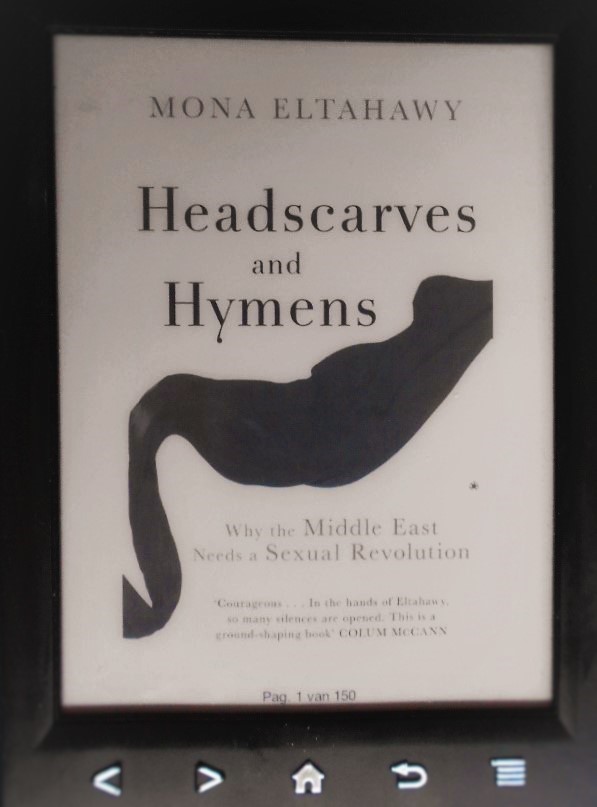 When I've read the book by Mona Eltahawy in advance of the 15th ilb (Internationales Literaturfestival Berlin) I was positively surprised by her clear statements regarding the position of women in various Arabic states. Is it provocative to name the treatment of women in Saudi Arabia "an apartheid" as in the citation above? Is it daring ? Is it audacious?
 By questioning her point of view are we turning the blame again on women instead of focusing the blame on those who create and uphold a society in which such callous treatment is possible?!
Is there an overall misogynist atmosphere for NOT reacting on such treatment of women? What about the treatment of women in orthodox Jewish areas, e.g. NYC and Jerusalem, where it is becoming more and more common to have women riding on buses only in the back, separating or setting them apart (=apartheid?!) from men and the front seats? Where is the outcry towards societies that tolerate and support such behaviour?
And, had the apartheid system in the US and South Africa been based on religious reasons instead of racial reasons would have Western countries fought against it as much as they did?! Certainly some food for thought!
I will meet Mona Eltahawy in Berlin in a discussion on feminism and I hope to attend a lively discussion! I am certainly looking forward to it!
 But beforehand I will see Laksmi Pamuntjak, an Indonesian poet, talking about her book Ellipsis / Alle Farben Rot (German by Martina Heinschke). As I will give a lecture on her around the IWD* in 2016 in Germany I am gathering information and try to meet her as many times as possible beforehand. Lucky me, she is also expected in Den Haag on 5 October with another reading...
 Then there will be Elif Shafak, a Turkish author (see my blog July 2014) - she was the author I had given a lecture on at the IWD* in Germany this year. Lucky me (again), there was a Turkish visitor to the lecture and he gave some additional background information on her books in relation to her Turkish readership which was really inspiring. As I consider her as another great female author, I am really excited to meet her in person (see also her TED talk July 2010).
 Another author I am really looking forward to is Kamila Shamsie, a Pakistani author with a long line of writers in her family (see my blog June 2012). A subtle and refined author as she is, having been nominated for this year's Bailey's Women's Prize for Fiction for her book A God in Every Stone, she is part of an extraordinary class of authors. Another event I am really happy to being able to attend.
 And last but not least there will be Jenny Erpenbeck. I've just met her in Zwolle (NL) while she received the "Europese literatuurprijs" (European prize for literature, see my blog April 2015) for her book Een handvol sneeuw together with her translator Elly Schippers (E: The End of Days) for which she also won the Independent Foreign Fiction Prize this year. She will present her latest book Gehen, ging, gegangen ('Go, Went, Gone' not yet translated) reflecting on the very current challenges with millions of refugees stranding in Europe. I am curious how she approached this subject!
And those are only the readings I have bought tickets for way ahead of times! There are many more events that attract my attention! So, exciting times lie ahead and I am looking forward on sharing my 'point of view' on the events on this blog. Also check the site of the 15th ilb yourself: www.literaturfestival.com
*IWD = international women's day
Quote of the Month - August 2015
"I am so homesick for the Kurfürstendam,
I am so yearning for my Berlin..."
(Take your time to listen to Hildegard Knef singing: Heimweh nach dem Kurfürstendam)
I am so yearning for my Berlin..."
(Take your time to listen to Hildegard Knef singing: Heimweh nach dem Kurfürstendam)
 |
| Hildegard Knef & Marlene Dietrich, two passionate voices closely connected to Berlin |
Great voices - Berlin I
 Dear reader of this blog, you had to wait a little bit to read another quote of the month mainly due to the fact that it is summer time and a lot of times I prefer to read outside, enjoying the few sun shines in the northern part of Europe.
  But here we are again...and strong, stronger than ever especially with some strong female voices. To begin with I started with two female singers, Marlene Dietrich and Hildegard (K)nef, both very well known, also to the English speaking public.
 Both women are closely connected to Berlin, both had 'lost a suitcase' in Berlin, both had sung of their longing to return to Berlin and both were lucky enough to being able to return eventually. (For a wonderful English cover version by Rene Caron on 'Suitcase in Berlin' click here)
 |
| copyright: placesonline.fr |
 Nevertheless, I finally will return with one simple reason: some really great voices will be there again. Not so much singing voices but reading voices by some excellent writers: Kamila Shamsie, Jenny Erpenbeck, Elif Shafak, Laksmi Pamuntjak and maybe I can stay long enough to also meet Zeruya Shalev who will only arrive after Jom Kippur. All are part of an interesting programme of the international literature festival "internationales literaturfestival Berlin" (ilb). It will be a thriving week and I am so excited to being able to meet all those four(+) women (additionally I will meet Mona Eltahawy, Laurie Penny and Josephine Decker) in one spot: Berlin.
 Pity that there won't be a get together of all of them in one discussion on female voices in the literary world...but this is a beginning and you never know what will be! So, I'll keep you informed...Maybe some of you are going there as well? I would love to learn about you and we might meet on the way?! You can contact me by mail or just use twitter @DiaLogaStef. Looking forward to it!
P.S.: If you happen to know some nice place to stay, I will be more than happy to learn about it!
Quote of the Month - July 2015
"Opanyin Poku stood up. 'I have heard. Am I the only one to know this story?'
Kayo shook his head while washing his hands in the bowl on the table. 'I have told you so that you can let the story get to those who need to know.'
from Tail of the Blue Bird by Nii Ayikwei Parkes (Vintage, Random House 2010)
Kayo shook his head while washing his hands in the bowl on the table. 'I have told you so that you can let the story get to those who need to know.'
from Tail of the Blue Bird by Nii Ayikwei Parkes (Vintage, Random House 2010)
Nii Ayikwei Parkes *1974
Over the years I befriended some people with a profession you don't usually meet in person, for example an Inuitologist. And, of lately, a pineapple farmer, indeed a Dutch pineapple farmer - actually living and working in Ghana. And since I am into literature, I tried to remember if I knew any author from Ghana. And sure I do: I recalled Nii Ayikwei Parkes in conversation with David Van Reybrouck at the WritersUnlimited literature festival (click here) in Den Haag this year! And while I did some research on Nii Ayikwei and his background I realised that there is a circle closing - enough reason to do another exception and present this month a male author on this blog.

 And this circle started some odd 25 years ago in Hamburg. I was studying American Literature, focusing on Afro-American literature. I was reading books by Alice Walker and Toni Morrison (the better known), Ann Petry and Paule Marshall (the lesser known) and, my most favourite author, Zora Neale Hurston.
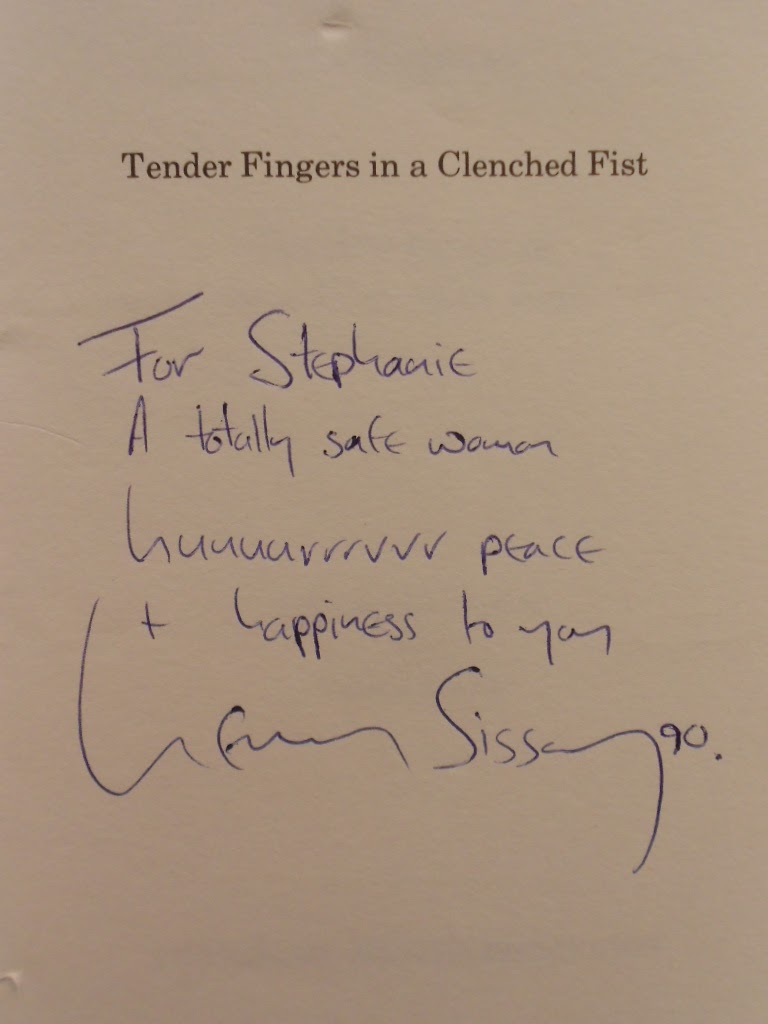
I was (and luckily still am) a curious one and always open to new styles in literature, always taking "the [road] less traveled by" (RF). So, when I came across an event which introduced some 'dub poets', I grew curious. And here, there were these two boys from the UK coming over to Hamburg to present their poetry in a sort 'slam session'. That's how I met Lemn Sissey (and Martin Glynn) and learned about 'musical' poetry (read the poem aloud and get into its rhythm). But I also learned about his struggle with life as a Black person in Britain ("British? Black and beautiful/Check it out my friend we're radical..."), with a social system hindering his mother to get back into contact with him for years. Beautifully mastered poems collected in his first publication with its telling title: Tender Fingers in a Clenched Fist (Bogle L'Ouverture Publications, 1988).
Now, you probably ask yourself, where is the connection to Ghanaian writer Nii Ayikwei Parkes?
Well, Nii Ayikwei is a writer in its broader sense. And he started with poetry to begin with. And, and here comes the missing link, both Lemn Sissey and Nii Ayikwei Parkes were members of Commonword, an initiative in Manchester to help new writers develop their passion. And it certainly helps: both are well known performing poetry artists and I wonder if it wasn't for poetry that made Lemn Sissey 'reach for the stars', being lately elected chancellor of the University of Manchester. I trust strongly in the possibility that poetry can do these things!
 Anyway, as mentioned Nii Ayikwei started with poetry - and he started strong: he was writer-in-residence, artist-in-residence, poet-in-residence in the UK and USA, attended various poetry festivals all over the world and is one of the youngest living writers featured in the "Poems on the Underground" programme in London with his poem "Tin Roof" (you can purchase the poster here). He started his own publishing company flipped eye publishing when he realised that his poetry wouldn't be sold if not published in the UK. The list continues with two CDs with spoken-word poetry (Incredible Blues & Nocturne of Phrase; click here to get to Spotify), several chapbooks on poetry and short stories published in various magazines, just to name some. From his second fiction manuscript, Afterbirth, an excerpt is featured in the New Writing 15 anthology published by Granta (2007). And getting back to the literature festival in Den Haag again, you can listen to some beautiful poems read by himself (besides David Grossman, Jennifer Clement and Stefan Hertmans) at Poets in the House. In 2007, Nii Ayikwei received the Arts Critics and Reviewers Association of Ghana Award for Poetry and in 2010 the Michael Marks Poetry Award and his debut novel Tail of the Blue Bird (2009) was shortlisted for the Commonwealth Writers' Prize in 2010 and awarded with the Prix Mahogany in 2014 for its French translation by Sika Fakambi.
 The novel is another welcoming new style of original writing: an honest depiction of life in Ghana with a truthful vocabulary giving you the right touch of the place. An honest novel with a main character in a torn country. A country torn between traditions of honouring the old and wise, while being corrupted by money and power. And the big question of: how far do you go along with a political system? How much will you compromise to be able to do the work you are trained in and love? How much do you go along with structures of power and corruption to live an easy life and enjoy some comfort?
Next to this political level of the 'outer' story, the inner story focuses on the inherent level of a story: why do we tell stories at all? What's the use of it? Maybe we find an answer in the book itself:
"The hunter sat up and took the last piece of meat from his bowl. 'Hmm. What more is there to say? That is the story. Like all stories, it is a story about forgetting for if we didn't forget there would be no mistakes and there would be no stories.'"
A mythical story set in the harsh reality of Ghana. A country in the grip of power structures, disrespect and humiliation of its people with some hope that the people will not submit (so it is more than a 'detective story' as mentioned in Dutch reviews).
And were is Nii Ayikwei now actually from? He was born in the UK while his parents from Ghana studied there, but grew up in Ghana when they returned. He, himself, returned again to the UK to study at the Metropolitan University in Manchester - and that is when I got curious and the circle started turning...
RT = Robert Frost, excerpt from his poem "The Road Not Taken"

 And this circle started some odd 25 years ago in Hamburg. I was studying American Literature, focusing on Afro-American literature. I was reading books by Alice Walker and Toni Morrison (the better known), Ann Petry and Paule Marshall (the lesser known) and, my most favourite author, Zora Neale Hurston.
 I was (and luckily still am) a curious one and always open to new styles in literature, always taking "the [road] less traveled by" (RF). So, when I came across an event which introduced some 'dub poets', I grew curious. And here, there were these two boys from the UK coming over to Hamburg to present their poetry in a sort 'slam session'. That's how I met Lemn Sissey (and Martin Glynn) and learned about 'musical' poetry (read the poem aloud and get into its rhythm). But I also learned about his struggle with life as a Black person in Britain ("British? Black and beautiful/Check it out my friend we're radical..."), with a social system hindering his mother to get back into contact with him for years. Beautifully mastered poems collected in his first publication with its telling title: Tender Fingers in a Clenched Fist (Bogle L'Ouverture Publications, 1988).
Now, you probably ask yourself, where is the connection to Ghanaian writer Nii Ayikwei Parkes?
Well, Nii Ayikwei is a writer in its broader sense. And he started with poetry to begin with. And, and here comes the missing link, both Lemn Sissey and Nii Ayikwei Parkes were members of Commonword, an initiative in Manchester to help new writers develop their passion. And it certainly helps: both are well known performing poetry artists and I wonder if it wasn't for poetry that made Lemn Sissey 'reach for the stars', being lately elected chancellor of the University of Manchester. I trust strongly in the possibility that poetry can do these things!
 Anyway, as mentioned Nii Ayikwei started with poetry - and he started strong: he was writer-in-residence, artist-in-residence, poet-in-residence in the UK and USA, attended various poetry festivals all over the world and is one of the youngest living writers featured in the "Poems on the Underground" programme in London with his poem "Tin Roof" (you can purchase the poster here). He started his own publishing company flipped eye publishing when he realised that his poetry wouldn't be sold if not published in the UK. The list continues with two CDs with spoken-word poetry (Incredible Blues & Nocturne of Phrase; click here to get to Spotify), several chapbooks on poetry and short stories published in various magazines, just to name some. From his second fiction manuscript, Afterbirth, an excerpt is featured in the New Writing 15 anthology published by Granta (2007). And getting back to the literature festival in Den Haag again, you can listen to some beautiful poems read by himself (besides David Grossman, Jennifer Clement and Stefan Hertmans) at Poets in the House. In 2007, Nii Ayikwei received the Arts Critics and Reviewers Association of Ghana Award for Poetry and in 2010 the Michael Marks Poetry Award and his debut novel Tail of the Blue Bird (2009) was shortlisted for the Commonwealth Writers' Prize in 2010 and awarded with the Prix Mahogany in 2014 for its French translation by Sika Fakambi.
 The novel is another welcoming new style of original writing: an honest depiction of life in Ghana with a truthful vocabulary giving you the right touch of the place. An honest novel with a main character in a torn country. A country torn between traditions of honouring the old and wise, while being corrupted by money and power. And the big question of: how far do you go along with a political system? How much will you compromise to be able to do the work you are trained in and love? How much do you go along with structures of power and corruption to live an easy life and enjoy some comfort?
 Next to this political level of the 'outer' story, the inner story focuses on the inherent level of a story: why do we tell stories at all? What's the use of it? Maybe we find an answer in the book itself:
"The hunter sat up and took the last piece of meat from his bowl. 'Hmm. What more is there to say? That is the story. Like all stories, it is a story about forgetting for if we didn't forget there would be no mistakes and there would be no stories.'"
A mythical story set in the harsh reality of Ghana. A country in the grip of power structures, disrespect and humiliation of its people with some hope that the people will not submit (so it is more than a 'detective story' as mentioned in Dutch reviews).
And were is Nii Ayikwei now actually from? He was born in the UK while his parents from Ghana studied there, but grew up in Ghana when they returned. He, himself, returned again to the UK to study at the Metropolitan University in Manchester - and that is when I got curious and the circle started turning...
RT = Robert Frost, excerpt from his poem "The Road Not Taken"
Quote of the Month - June 2015
"`'Like' is a strong word," Shan said. "So everyone, this book is a memoir, right? It's about tons of stuff, growing up in this all-white town, being the only black kid in my prep school, my mom's passing, all that stuff. My editor reads the manuscript and says, 'I understand that race is important here but we have to make sure the book transcends race, so that it's not just about race[']. And I'm thinking. But why do I have to transcend race? You know, like race is a brew best served mild, tempered with other liquids, otherwise white folk can't sallow it.´"
From Americanah by Chimamanda Ngozi Adichie (2013, Anchor Books)
From Americanah by Chimamanda Ngozi Adichie (2013, Anchor Books)
Chimamanda Ngozi Adichie *1977

Actually, I came across Chimamanda Ngozi Adichie and her latest book Americanah via my former participants of The English Book Club. While I was abroad for some months they decided to go ahead and chose books on their own to read and discuss. When I returned this spring, I joined them on a meeting and Chimamanda's book was on the list.
I have to admit that I was 'mildly surprised' they had chosen a book with 588 pages! But when I started reading Americanah, I couldn't stop. Timing, rhythm, style, schedule, characters...name it, everything fits its place and just by reading it you get into a flow.
Though, it certainly is not a lovely prose fiction but a rather tough-minded one with lots of bits to chew on. Open for another quote?
"`When I started in real estate, I considered renovating old houses instead of tearing them down, but it didn't make sense. Nigerians don't buy houses because they're old. A renovated two-hundred-year-old mill granary, you know, the kind of thing Europeans like. It doesn't work here at all. But of course it makes sense because we are Third Worlders and Third Worlders are forward-looking, we like things to be new, because our best is still ahead, while in the West their best is already past and so they have to make a fetish of that past.´"

With her talk on "We Should all be Feminists" (also published 2014 by Fourth Estate) she claims that equality for women would create equality for men as well, for: "The harder [sic] a man feels compelled to be, the weaker his ego is. And then we do a much greater disservice to girls, because we raise them to cater to the fragile egos of males." So, to make feminism an issue, not only by women but also by men, inequality could be diminished and more men might also become the person they actually are at their core and not trapped in an oppressive 'male' role.
I wonder if Chimamanda had Eugene Achike on her mind when she talked about this destructive 'relationship' between men and women? Eugene, the main character's father in her first novel Purple Hibiscus, a religious zealot intimidating his family both physically and emotionally. An impressive first novel published in 2003 and awarded with the Commonwealth Writer's Prize for Best First Book in 2005.
 How eager Nigerian-born Chimamanda is as an observer of society and a spokesperson for her surroundings became obvious earlier on with her second novel, Half of a Yellow Sun. Published in 2006, the book covers the times of the Nigerian Civil War (1967-1970) and the massacres between Hausa and Igbo people during which the Igbo created a new republic, called Biafra, showing 'half a yellow sun' in its flag. Skilfully, she interweaves the lives of her characters with the political events using flashbacks to give a larger picture to her audience.
 Not only won the book the Orange Prize for Fiction in 2007 but was also made into an impressive Nollywood movie presented at the Toronto International Film Festival in 2013 (click here for the TIFF trailer).
Born in Enugu, Chimamanda grew up as fifth of six children in the university town of Nsukka, Nigeria. Both parents worked at the university and Chimamanda started studying medicine and pharmacy in Nigeria. In 1996 Chimamanda moved on to studying in the United States of America where she received a bachelor degree (summa cum laude) in communication and political sciences in 2001. Two years later, she completed her master's degree in creative writing and in 2008 a Master of Art's degree in African studies. She currently commutes between Nigeria, teaching creative writing, and the USA.
And very up-to-date: her latest book, Americanah, is currently shortlisted for the International IMPAC Dublin Literary Award and the 'Winning Announcement' will be on 17th June (click here). I am most curious if Chimamanda will be honoured with another award. She certainly deserves it!
P.S.: Interested in all her nominations, awards and honours? Please check wikipedia for the list!
Quote of the Month - May 2015
“Stories
and poems don’t just appear on a page; they germinate, grow and are crafted.”
by Amal Chatterjee, ‘Editor’s Preface’
“The short story is that rare form of literature that follows just one rule, which is that there is no rule. It is fluid like water, can flow in any direction or be stagnant. It is like a fleeting feeling, a glimpse, a moment in time. It is not meant to satisfy but to whet your appetite for more good writing,[...].”
by Sabyn Javeri
All quotes from Creative Writing, Writers on Writing edited by Amal Chatterjee
by Amal Chatterjee, ‘Editor’s Preface’
“Writing
before all, is communication. It is communication with oneself and one’s inner
life even before it is communication with another. More broadly than that even,
writing achieves something. It externalises what was previously internal and
half-recognised. It allows thought to create itself by leaving a trail.”
by
Kathryn Heyman
“The short story is that rare form of literature that follows just one rule, which is that there is no rule. It is fluid like water, can flow in any direction or be stagnant. It is like a fleeting feeling, a glimpse, a moment in time. It is not meant to satisfy but to whet your appetite for more good writing,[...].”
by Sabyn Javeri
“When
you let language lead rather than trying to constrict its movement, it frees
the language and allows it to express itself in new ways through you, through
your individual voice. It is this that identifies the individual, gives the
individual identity within the tradition. And it is this that makes writing
creative and original.”
by
Colm Breathnach
“But
just as in our non-writing life we never truly know what is going to happen
next, what I was looking for each time was the poem beyond the poem I sat down
at first to write. [...] So the process of feeling in the dark for a poem
begins.”
by
Jane Draycott
“It
is as if the story is not quite complete without a discussion about it. This
may be in recognition of the reader writer duality that surrounds the story;
that after the story is written it needs to be read to complete its cycle of
being.”
by
Fred D’Aguiar
All quotes from Creative Writing, Writers on Writing edited by Amal Chatterjee
"Creative Writing - Writers on Writing"

First of all I tried to 'name' the book: it is an anthology for it presents eight very individual pieces of writing. At the same time it is a collection of essays, for each writer reflects on her/his unique writing process of the published piece of writing.
Next, the book is aimed at writers in general to give an inspiring insight of the diverse and very individual approaches to writing. At the same time, as a reader, this is a captivating collection of pieces by eight distinctive writers with a variety of languages and backgrounds (e.g. Australia, USA, India). So, whatever name I'll might try on the book it remains a fascinating and inspiring collection of pieces of writing supplemented by essays.
Take for example Fred D'Aguiar's short story on his grandfather. As a non-native speaker I had to wade through it with a dictionary close by. But as with a lot of walks in life: the story that unfolds before you rewards all the strain. For Fred, Guyanese by background, doesn't use the regular linear time progression but the lyric time as he explains in his supplementing essay: "I prefer to explore the motives behind the character's impulse to sow chaos in the story."
Emily Raboteau, in contrast, has chosen to use a personal experience for her short story to show how she 'transforms' her experience into a story: "I [...] knew that at its heart this story was about the cataclysmic transformation of becoming a parent. [...] The difference between the journal entry and the short story is structure. Real life is chaotic and, if not meaningless, plotless [sic]. Plot is the thing we impose upon real life to create story." I should say, completely the opposite to Fred D'Aguiar's point of view, isn't it?
Whereas Philip Gross reflects on his poem: "It is a journey, the oldest story-shape of them all [...]."
Another point of view?
"For me, characters are the backbone of the story. My stories lean heavily on the character rather than the plot, sometimes at the cost of slowing down the pace of the narrative." Sabyn Javri, Pakistani-born writer on her short story: "As the people in my stories reveal more about themselves, the story unfolds."
 And then there is poet Colm Breathnach, from Ireland: "All creative writing starts with language, not with ideas, plot outlines, rhythms or literary theories but simply with language itself, with words and the desire to use words in a particular way." Which made Colm realise that he can best express the meaning of a word in his mother tongue, Irish.
 So you see, a wide range of points of view. And these are only quotes from the reflections! The stories and poems are at least as rewarding making it a matchless anthology/collection (see foto).
All in all the book is a well-composed collection of eight idiosyncratic pieces of writing with their supplementary essays. A unique combination which makes it a unique chance to listen to writers and their individual approaches to that particular writing itself.
A book, as mentioned, which is not easily named, registered or labelled but certainly worth expanding. So, my humble advice to the publisher: seriously think about making it a series.
Quote of the Month - April 2015
"Her mother comes back. As she walks past, she removes the sheet covering the hall mirror, folds it up, and carries it into the baby's room. She lays it at the bottom of the suitcase she's brought along for just this purpose, then takes the child's things from their drawer and puts them in the suitcase with the sheet. During the months that proceeded the child's birth, all of them - the pregnant woman, her mother, and her grandmother - sewed, knitted, and embroidered these jackets, dresses, and caps. Her mother now shuts the empty drawer. On top of the chest is the toy with the little silver bells. When she picks it up, the bells make a jingling sound. They jingled yesterday as well, when her daughter was still a mother playing with her child. The jingling hasn't changed in the twenty-four hours that have passed since then."
From The End of Days by Jenny Erpenbeck (Portobello Books; translation Susan Bernofsky)
From The End of Days by Jenny Erpenbeck (Portobello Books; translation Susan Bernofsky)
Jenny Erpenbeck *1967
To regular visitors of my blog, Jenny Erpenbeck isn't actually an 'unknown' author anymore. I had her already presented on my blog after I saw her at the EdBookFest in 2011 (read here). That time it was her then recently published book Visitation (org: Heimsuchung) which was in focus then.
So, why presenting the author another time?
 Well, times fly and Jenny Erpenbeck is nominated for the "Europese Literatuurprijs 2015" with her latest book Een handvol sneeuw (orig: Aller Tage Abend (2012)/ UK: The End of Days).
 This particular literary prize is a Dutch/Flemish cooperation and an initiative to highlight books by European authors and their Dutch/Flemish translators (see regulations (Dutch only)). The longlist 2015 highlights on 20 authors from 11 European countries: Portugal, Spain, France, UK, Finland, Norway, Germany, Iceland, Switzerland, Greece and Italy whereas the translation spans even further as Mikhail Pavlovich Shishkin writes in Russian though living in Switzerland.
 Additionally, Jenny Erpenbeck crystallises more and more into a young, diligent high-class author. An author in the league of a Kamila Shamsie and Kiran Desai, a family background of writers included. She has such a unique voice of her own, her style of writing is brilliant, her use of words polished and refined, while her approach to the chosen subject is remarkable and singular.
So it is with her latest book The End of Days, nominated for the above mentioned literary prize: WHEN comes the end of days? As a child? As a young girl? As a young woman? As an elderly lady? Jenny uses five possibilities as a canvas to describe the lives that might or might not have taken place beforehand. As a reader we are five times lead into some metaphorical dead-end streets. Yet the narrator knows a rat run each time that takes us four times back again on to the main road.
Typically Jenny, the book is written in a minor mode, quietly moving ahead, very introverted, inside orientated. It's like she takes you along an inner search to the essence of life while creating five times a possible pattern that might lead to a possible end.
 And it is about loss. Especially the last chapter echoes the loss when one realises that there won't be and cannot be another rat run to the main road. It's a loss not only of dear ones but losses that span generations, closing a circle, reminding me of her other book Things That Disappear (orig. Dinge, die verschwinden (2009)). A circle that starts and ends with objects and stories emerging and re-emerging, echoing in the reader's ears reminding one on how everything started.
A quiet and simple story; one could also read it as a philosophical hi-story refuting the idea that history is a linear progress as the Western world strongly believes. In her novel Jenny resounds the philosophy of the Eastern world that hi-story is a cyclic progress resuming at 'the end of days'.
The more I read by Jenny the more I grow fascinated by her style, her tone, her writer's idiosyncrasy, though there seems a familiarity of characters. A strong novel from a noteworthy German author.
 The other titles nominated for the prize are certainly as strong, all of them first-class literature by authors as Finnish writer Sofi Oksanen, French writer Karine Tuil, or Greek author Yannis Kiourtsakis with his classic Double Exile (NL: Bij wijze van roman) actually also listed as a 'rediscovery' by schwob, another Dutch/Flamish cooperation (zie here). By September we should learn who won the prize. I'll keep you informed.
P.S.: For those living in the Netherlands and interested in meeting the various translators there are a variety of possibilities. Just check the site www.europeseliteratuurprijs.nl for more information.
So, why presenting the author another time?
Well, times fly and Jenny Erpenbeck is nominated for the "Europese Literatuurprijs 2015" with her latest book Een handvol sneeuw (orig: Aller Tage Abend (2012)/ UK: The End of Days).This particular literary prize is a Dutch/Flemish cooperation and an initiative to highlight books by European authors and their Dutch/Flemish translators (see regulations (Dutch only)). The longlist 2015 highlights on 20 authors from 11 European countries: Portugal, Spain, France, UK, Finland, Norway, Germany, Iceland, Switzerland, Greece and Italy whereas the translation spans even further as Mikhail Pavlovich Shishkin writes in Russian though living in Switzerland.So it is with her latest book The End of Days, nominated for the above mentioned literary prize: WHEN comes the end of days? As a child? As a young girl? As a young woman? As an elderly lady? Jenny uses five possibilities as a canvas to describe the lives that might or might not have taken place beforehand. As a reader we are five times lead into some metaphorical dead-end streets. Yet the narrator knows a rat run each time that takes us four times back again on to the main road.
Typically Jenny, the book is written in a minor mode, quietly moving ahead, very introverted, inside orientated. It's like she takes you along an inner search to the essence of life while creating five times a possible pattern that might lead to a possible end.
And it is about loss. Especially the last chapter echoes the loss when one realises that there won't be and cannot be another rat run to the main road. It's a loss not only of dear ones but losses that span generations, closing a circle, reminding me of her other book Things That Disappear (orig. Dinge, die verschwinden (2009)). A circle that starts and ends with objects and stories emerging and re-emerging, echoing in the reader's ears reminding one on how everything started. A quiet and simple story; one could also read it as a philosophical hi-story refuting the idea that history is a linear progress as the Western world strongly believes. In her novel Jenny resounds the philosophy of the Eastern world that hi-story is a cyclic progress resuming at 'the end of days'.
The more I read by Jenny the more I grow fascinated by her style, her tone, her writer's idiosyncrasy, though there seems a familiarity of characters. A strong novel from a noteworthy German author.
The other titles nominated for the prize are certainly as strong, all of them first-class literature by authors as Finnish writer Sofi Oksanen, French writer Karine Tuil, or Greek author Yannis Kiourtsakis with his classic Double Exile (NL: Bij wijze van roman) actually also listed as a 'rediscovery' by schwob, another Dutch/Flamish cooperation (zie here). By September we should learn who won the prize. I'll keep you informed. P.S.: For those living in the Netherlands and interested in meeting the various translators there are a variety of possibilities. Just check the site www.europeseliteratuurprijs.nl for more information.
Subscribe to:
Posts (Atom)