Christmas is a time of cheers,
not a time of sorrows.
So have some fun, drink some beer,
and be at work tomorrow!
Christmas greetings to the volunteers, Kibbutz Hatzor-Ashdod (Israel), 1985
 Some time ago, my mother asked me how Berlin has been...that's when I realised that I was lagging behind with this blog. So much had happend in the meantime: I have not only been to Berlin in September but, at the same time, found and moved into "a room of my own" after 1,5 years of shifting between The Netherlands and Germany. So, for you, dear reader, I will look back on my stay in Berlin at the "Internationales Literaturfestival 2015" (ilb).
 I had tickets bought to some very inspiring and notable authors. Let's start with Jenny Erpenbeck. Just in short as I had her already mentioned several times on this blog (see April & September 2015 & July 2012). Jenny introduced her latest book in German Gehen, ging, gegangen ('Go, went, gone'; not yet translated) in which she turns to the issue of immigrants, specifically in her book, situated in Berlin. I have started reading it while staying in Berlin which was alluring for I walked some places that are mentioned in the book which made it even more palpable.
 Then there was Laksmi Pamuntjak with her latest book Amba / The Question of Red / Alle Farben Rot (transl.: Martina Heinschke) in which she interweaves historical incidents with an Indonesian mythology. I have seen her later again at the Writers Unlimited programme The Series in den Den Haag being interviewed on the subject of Indonesia during the times of 1965-66. I will write more on her in springtime as I will give a talk on her in Germany in March 2016.
 As Indonesia had been guest of honour at the Buchmesse Frankfurt this year the Indonesian Embassy in Berlin held a book presentation dealing with the complex subject of the 30 September Movement. As I will have a talk on Laksmi I took the opportunity to gather all possible additional information around this subject. So I bought a ticket to Leila S. Chudori's presentation of her latest novel Pulang / Home. Whereas Laksmi is approaching the same subject from a mythical point of view Leila takes a journalistic approach. Still, both authors are brave enough to touch a taboo on Indonesian history. Interesting to me not only because of the talk I will give but also because Indonesia is still closely connected to The Netherlands. For those living in The Netherlands: Leila's book has just been published by De Geus: Naar huis (transl.: Henk Maier) and she will attend the Tong Tong Festival in Den Haag at the end of May 2016.


 And then there had been Kamila Shamsie, another striking author (see also June 2012). While I attended the reading on her latest book A God in Every Stone I decided to add her to my talk on modern Indian women writers in October in Germany. To get a better understanding of this ongoing twist between India and Pakistan it is certainly necessary to read both sides of the medal and Kamila is, next to being Pakistani, an exceptional author and I sincerely recommended her books to my German audience. I boldly compare her, though she is still young of age, to Salman Rushdie, especially in relation to her expansive approach in her books.
 I was very glad to have been to the ilb this summer and having been able to meet all these excellent female authors at one place. And - there was this excellent interviewer (in the picture next to Kamila): Gabriele von Arnim. To have all English interviews translated on the spot by the interviewer was sometimes very annoying (Germans still seem very reluctant to do an effort themselves). But Gabriele did such a great job by interrelating questions and translation that it didn't feel as time consuming as with others. An outstanding performance.
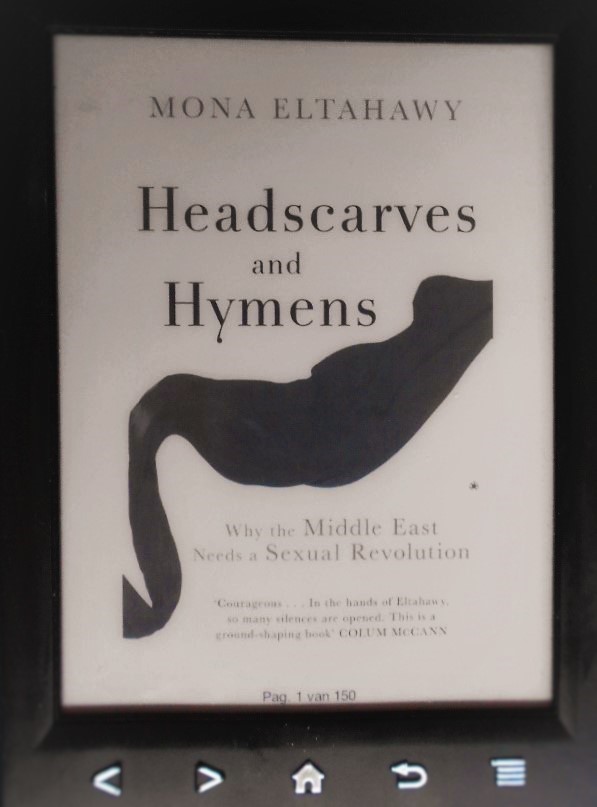 When I've read the book by Mona Eltahawy in advance of the 15th ilb (Internationales Literaturfestival Berlin) I was positively surprised by her clear statements regarding the position of women in various Arabic states. Is it provocative to name the treatment of women in Saudi Arabia "an apartheid" as in the citation above? Is it daring ? Is it audacious?
  But beforehand I will see Laksmi Pamuntjak, an Indonesian poet, talking about her book Ellipsis / Alle Farben Rot (German by Martina Heinschke). As I will give a lecture on her around the IWD* in 2016 in Germany I am gathering information and try to meet her as many times as possible beforehand. Lucky me, she is also expected in Den Haag on 5 October with another reading...
 Then there will be Elif Shafak, a Turkish author (see my blog July 2014) - she was the author I had given a lecture on at the IWD* in Germany this year. Lucky me (again), there was a Turkish visitor to the lecture and he gave some additional background information on her books in relation to her Turkish readership which was really inspiring. As I consider her as another great female author, I am really excited to meet her in person (see also her TED talk July 2010).
 Another author I am really looking forward to is Kamila Shamsie, a Pakistani author with a long line of writers in her family (see my blog June 2012). A subtle and refined author as she is, having been nominated for this year's Bailey's Women's Prize for Fiction for her book A God in Every Stone, she is part of an extraordinary class of authors. Another event I am really happy to being able to attend.
 And last but not least there will be Jenny Erpenbeck. I've just met her in Zwolle (NL) while she received the "Europese literatuurprijs" (European prize for literature, see my blog April 2015) for her book Een handvol sneeuw together with her translator Elly Schippers (E: The End of Days) for which she also won the Independent Foreign Fiction Prize this year. She will present her latest book Gehen, ging, gegangen ('Go, Went, Gone' not yet translated) reflecting on the very current challenges with millions of refugees stranding in Europe. I am curious how she approached this subject!
 |
| Hildegard Knef & Marlene Dietrich, two passionate voices closely connected to Berlin |
 Dear reader of this blog, you had to wait a little bit to read another quote of the month mainly due to the fact that it is summer time and a lot of times I prefer to read outside, enjoying the few sun shines in the northern part of Europe.
  But here we are again...and strong, stronger than ever especially with some strong female voices. To begin with I started with two female singers, Marlene Dietrich and Hildegard (K)nef, both very well known, also to the English speaking public.
  |
| copyright: placesonline.fr |
 Nevertheless, I finally will return with one simple reason: some really great voices will be there again. Not so much singing voices but reading voices by some excellent writers: Kamila Shamsie, Jenny Erpenbeck, Elif Shafak, Laksmi Pamuntjak and maybe I can stay long enough to also meet Zeruya Shalev who will only arrive after Jom Kippur. All are part of an interesting programme of the international literature festival "internationales literaturfestival Berlin" (ilb). It will be a thriving week and I am so excited to being able to meet all those four(+) women (additionally I will meet Mona Eltahawy, Laurie Penny and Josephine Decker) in one spot: Berlin.
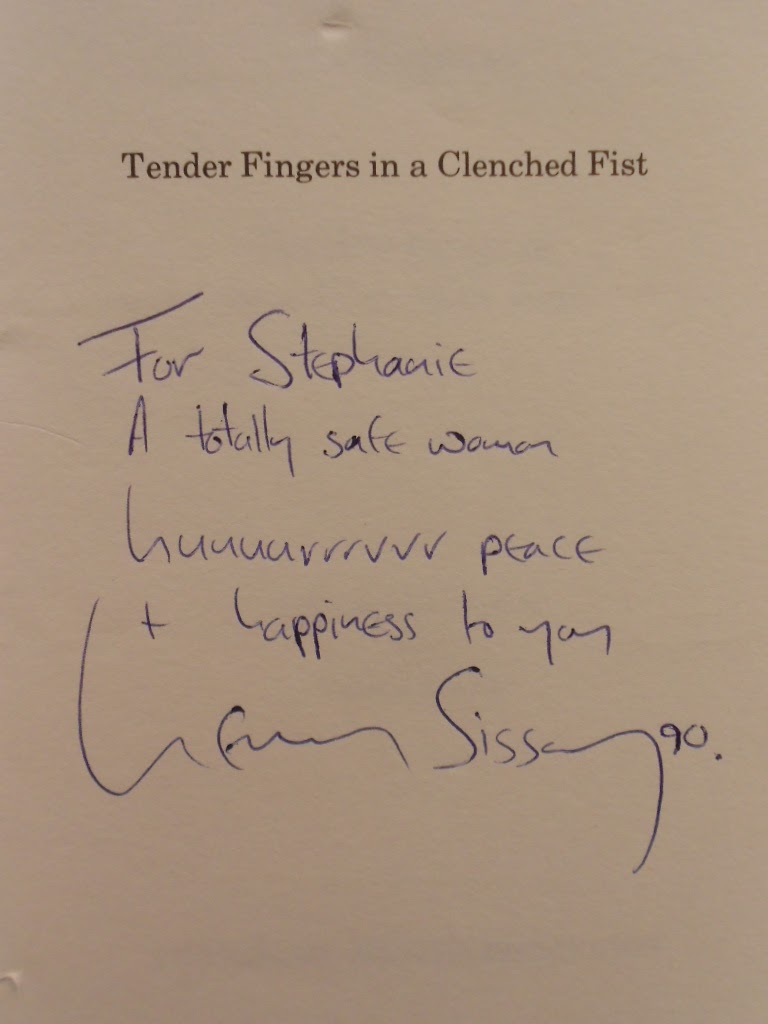 And this circle started some odd 25 years ago in Hamburg. I was studying American Literature, focusing on Afro-American literature. I was reading books by Alice Walker and Toni Morrison (the better known), Ann Petry and Paule Marshall (the lesser known) and, my most favourite author, Zora Neale Hurston.
  Anyway, as mentioned Nii Ayikwei started with poetry - and he started strong: he was writer-in-residence, artist-in-residence, poet-in-residence in the UK and USA, attended various poetry festivals all over the world and is one of the youngest living writers featured in the "Poems on the Underground" programme in London with his poem "Tin Roof" (you can purchase the poster here). He started his own publishing company flipped eye publishing when he realised that his poetry wouldn't be sold if not published in the UK. The list continues with two CDs with spoken-word poetry (Incredible Blues & Nocturne of Phrase; click here to get to Spotify), several chapbooks on poetry and short stories published in various magazines, just to name some. From his second fiction manuscript, Afterbirth, an excerpt is featured in the New Writing 15 anthology published by Granta (2007). And getting back to the literature festival in Den Haag again, you can listen to some beautiful poems read by himself (besides David Grossman, Jennifer Clement and Stefan Hertmans) at Poets in the House. In 2007, Nii Ayikwei received the Arts Critics and Reviewers Association of Ghana Award for Poetry and in 2010 the Michael Marks Poetry Award and his debut novel Tail of the Blue Bird (2009) was shortlisted for the Commonwealth Writers' Prize in 2010 and awarded with the Prix Mahogany in 2014 for its French translation by Sika Fakambi.
 The novel is another welcoming new style of original writing: an honest depiction of life in Ghana with a truthful vocabulary giving you the right touch of the place. An honest novel with a main character in a torn country. A country torn between traditions of honouring the old and wise, while being corrupted by money and power. And the big question of: how far do you go along with a political system? How much will you compromise to be able to do the work you are trained in and love? How much do you go along with structures of power and corruption to live an easy life and enjoy some comfort?